Audio Connectors
 |
| A-gauge jack plug |
There are five audio connectors which are commonly used. These are; the XLR, the B gauge jack plug, the Bantam/TT plug, the A-gauge jack plug and the RCA phono plug.
Bantam/TT plug
 |
| XLR Connector |
 |
| B gauge jack plug |
 |
| RCA phono plug |
The three-pin XLR seems to be the connector which is the most strongly associated with professional sound equipment. These are both used for mics and for line-level combinations.
This standard has 3 pins. Pin 1 interfaces the hot side of the balance on pin 2 and the cold side on pin 3. Most of the time pin 3 would be remembered by the return.
Outputs are usually given on male connectors, with pins, while on the other hand inputs are usually given on female connectors, with sockets.
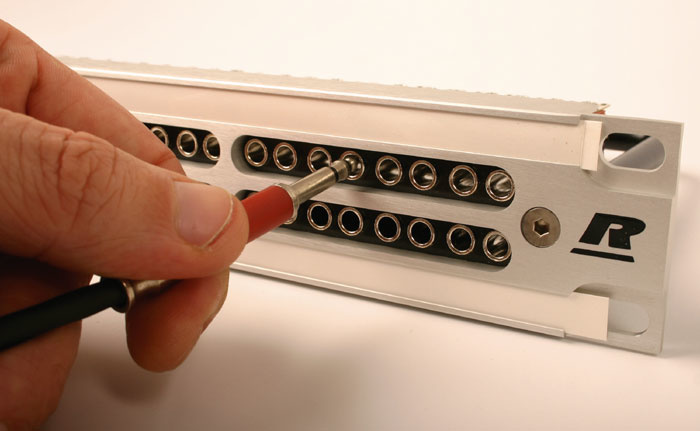 The Bantam TT is a very small version of the B-gauge. Although they are more fragile one can fit more connections. This has made them common for requests to build for example patchbays for large consoles.
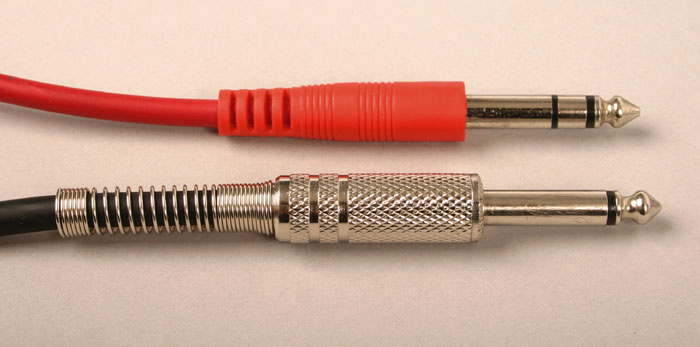 Despite the fact that A-gauge and B-gauge have the same overall shaft diameter, they have completely different tip shapes and also the dimensions and positions of the insulators are different. The difference between them is that the B-gauge plug has a small, rounded tip while the A-gauge socket is unlikely to make positive connection since it has a smaller tip. When an A-gauge plug is inserted in a B-gauge socket, its large tip tends to strain and bend the contacts. If this happens, then they become irregular with actual B-gauge plugs.
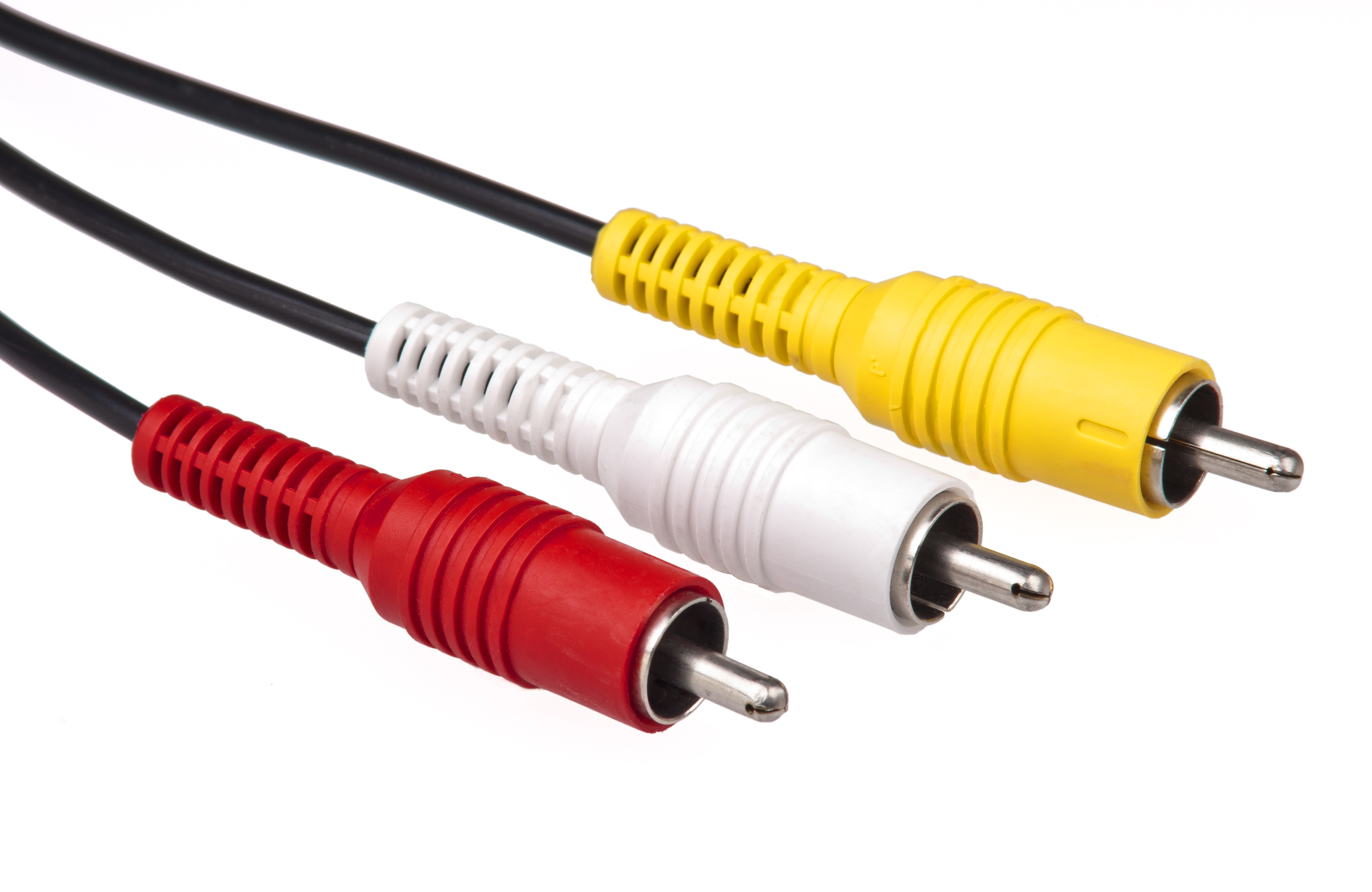
The last audio connector is the RCA phono plug. This quality is an unbalanced connector. It was very commonly used in semi professional equipment. The outer ring of the RCA phono plug and socket are usually used for the screen connections while the central of the pin or socket is usually used for the hot signal connection. The outer of the spring action is all that holds the RCA connector in place.



No comments:
Post a Comment