Saturday, 31 December 2016

Digital Audio Workstations (DAW)

Digital Audio Workstations (DAW)

DAW is a type of software. All DAWs, come with sufficient plug-ins and software tools to help the user. There are many types of DAWs and so one should consider a number of factors when buying a DAW. However, at the moment the majority of DAWs, are all of good quality making genuine multi-track recordings. Besides this, setting up complex MIDI (Musical Instrument Digital Interface), this is a computer program to handle an audio loop.


Pro tools need to have a sample rate of 44.1 kHz which is commonly used for music and 48 kHz which is usually used for films. Mono describes as single audio channel while stereo describes as left and right audio channels. When we say 'Fade in', the sound increases slowly while someone speaks while 'Fade out' is vice versa.
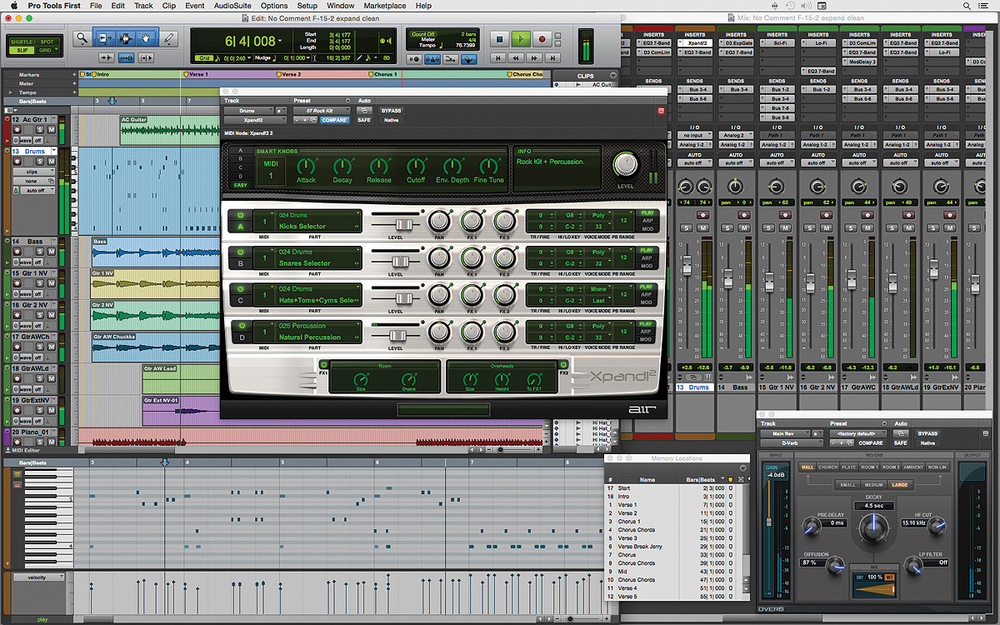
Avid's Pro Tools

Avid's Pro Tools, for example, are commonly used for industrial purposes. It was initially an audio-only system, constructed for recording, editing, and mixing. The editing and the mixing of the Avid's Pro Tools are found to be one of the finest tools The MIDI and the content tools have been used for quite some time. This is no longer the case since the Pro Tools have been a very good MIDI sequencer for many iterations. Notwithstanding this, audio is definitely an outstanding choice for people who do numerous multitrack recording and mixing. 
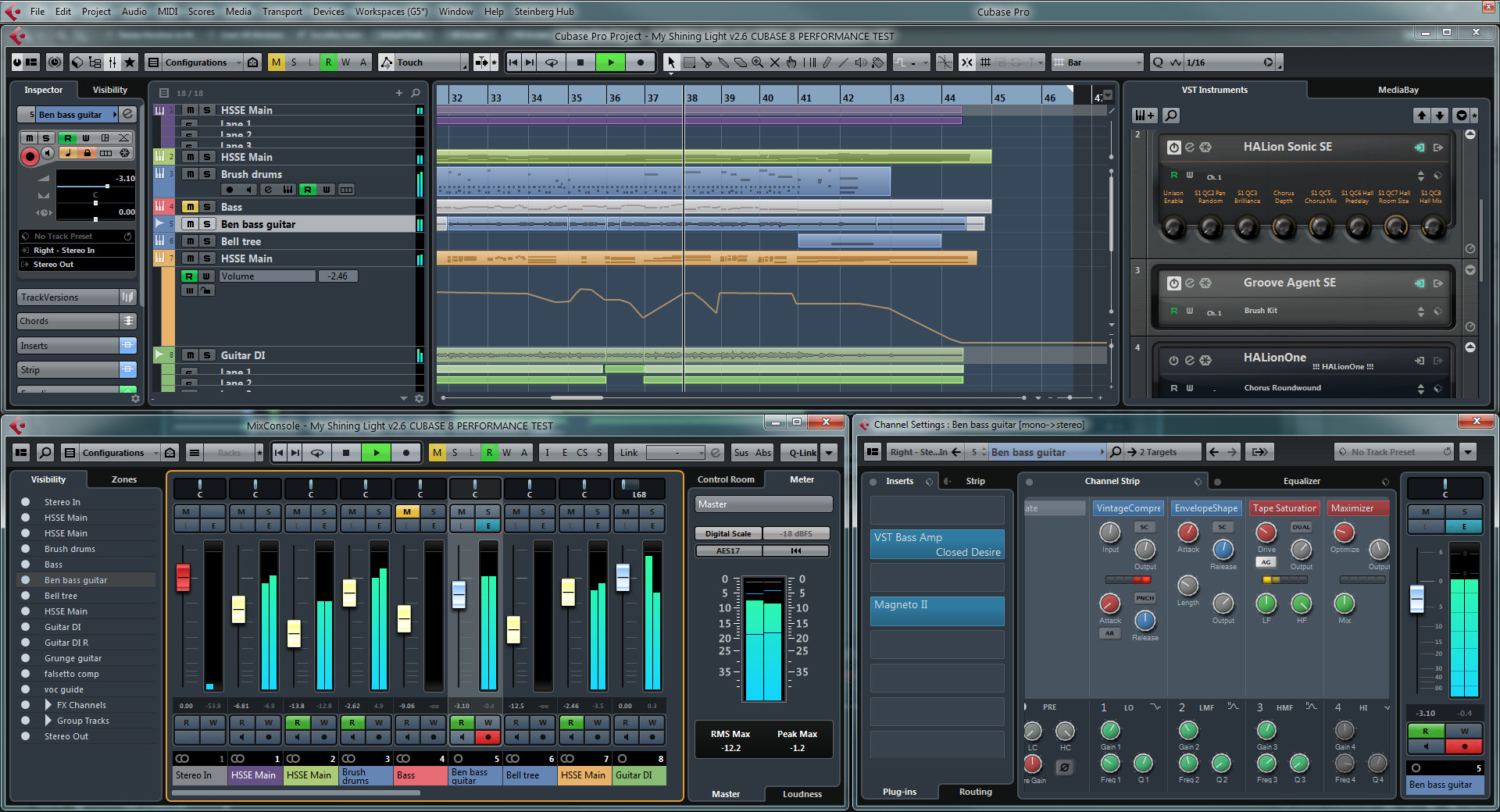

Image result for steinberg cubase 8
Steinberg Cubase

Reflecting the transformation of Pro Tools is Steinberg's Cubase. This started as a MIDI (only sequencer for the Atari), though it has inserted a complete audio recording, editing and mixing features for years. Atari is a word which is used between electronic musicians. Steinberg Cubase and Avid Pro Tools have together been used in a particular way. This is that, since Cubase has experience in editing systems and a superior mixing features, like VCA faders, to oppose those of any Digital Audio Workstations. VCA stands for Voltage Controlled Amplifier. It is a channel gain control that can be regulated by changing a DC voltage on the control input.
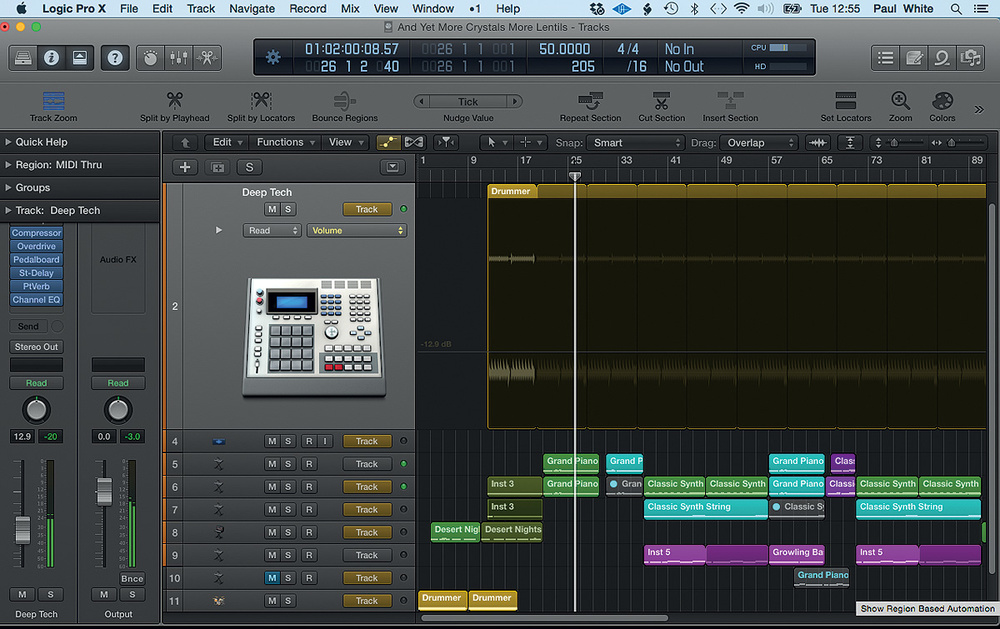

Apple Logic


Similar to Cubase, Apple's Logic started as a MIDI sequencer and picked up its audio chops over a while. Currently, it can be said to contest with the finest of them, in relation to recording, editing and mixing. Unfortunately, it is a Mac-only programme and so it gives the Apple fans to be superior about. However they are superior in some cases: Logic is possibly the best-selected DAW in expression of the instruments and sounds that are included with it - particularly in its moderate low price. The user gets the EXS sampler and some instruments which will be in the Logic are Drummer, Piano and synthesizers. The Apple's Logic does not have a bad editing either.
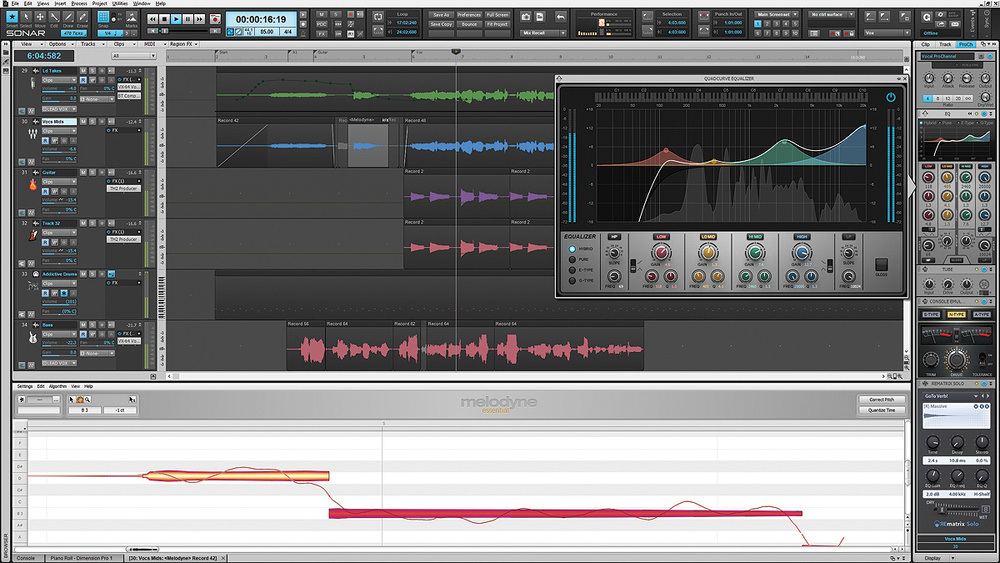

Cakewalk Sonar


The fullest version of Cakewalk Sonar Platinum has an instrument and plug-in bunch to rival Logic's, in addition to Addictive Drums 2 Producer Bundle, Pro-channel, a new vocal-aligning plug-in, this is called Vocal-Sync and a plethora of highly notice software synths, this includes Z3TA+ Classic, Dimension Pro and Rapture. AudioSnap is Sonar's holding on time-stretching and audio-added technology and the only thing that has been included is Mix Recall. This enables you to save versions of mixes in the same project, such as for easy vocal up and vocal down bounces.
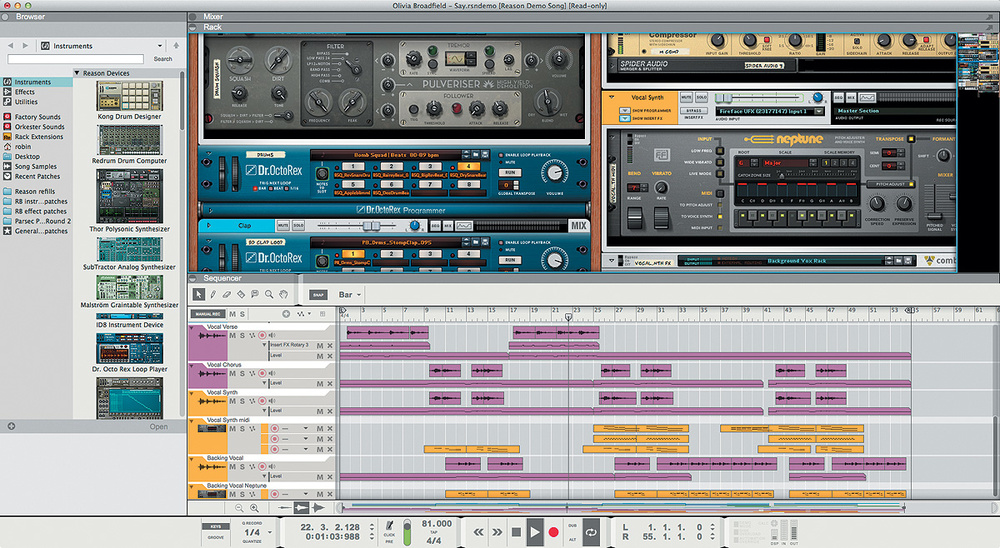

Propellerhead's Reason

Synthesizers and electronic music are preferred by users, a less better option is Propeller-head's Reason, which was basically accepted as a kind of basic synth rack and sequencer. Its origin are still much noticeable as there is still a synth rack which the user can swap around to connect its virtual cables and patch panels and a huge collection of synths and samplers is added in the package. However the latest version is definitely in a better total fledged DAW, entirely with a good SSL-inspired mixer. Like its inspiration, Reason's console have EQ, gating and compression on every channel, additionally on the master bus and there is a plan for extensive use of multing. Multing means duplicating mixer channels and then manage them dissimilarly, for detailed parallel-processing method.

Hereunder shows how to prepare a mix in a DAW:


https://www.youtube.com/watch?v=tTz6XHK2eKQ

Wednesday, 14 December 2016

Audio Connectors

Audio Connectors


Image result for A-gauge jack plug
A-gauge jack plug
There are five audio connectors which are commonly used. These are; the XLR, the B gauge jack plug, the Bantam/TT plug, the A-gauge jack plug and the RCA phono plug. 
Image result for Bantam/TT plug


Bantam/TT plug
Image result for xlr connector
XLR Connector


Image result for B gauge jack plug
B gauge jack plug
Image result for RCA phono plug
RCA phono plug


The three-pin XLR seems to be the connector which is the most strongly associated with professional sound equipment. These are both used for mics and for line-level combinations. 

This standard has 3 pins. Pin 1 interfaces the hot side of the balance on pin 2 and the cold side on pin 3. Most of the time pin 3 would be remembered by the return. 
Image result for XLR with pin numbers 
Outputs are usually given on male connectors, with pins, while on the other hand inputs are usually given on female connectors, with sockets.

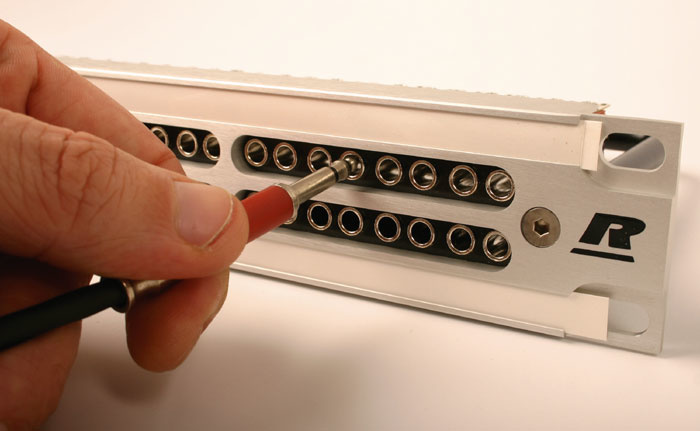
The Bantam TT is a very small version of the B-gauge. Although they are more fragile one can fit more connections. This has made them common for requests to build for example patchbays for large consoles.

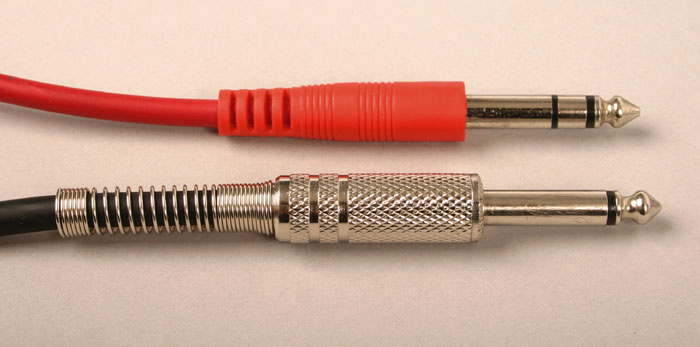
Despite the fact that A-gauge and B-gauge have the same overall shaft diameter, they have completely different tip shapes and also the dimensions and positions of the insulators are different. The difference between them is that the B-gauge plug has a small, rounded tip while the A-gauge socket is unlikely to make positive connection since it has a smaller tip. When an A-gauge plug is inserted in a B-gauge socket, its large tip tends to strain and bend the contacts. If this happens, then they become irregular with actual B-gauge plugs.
Image result for rca phono connector with information
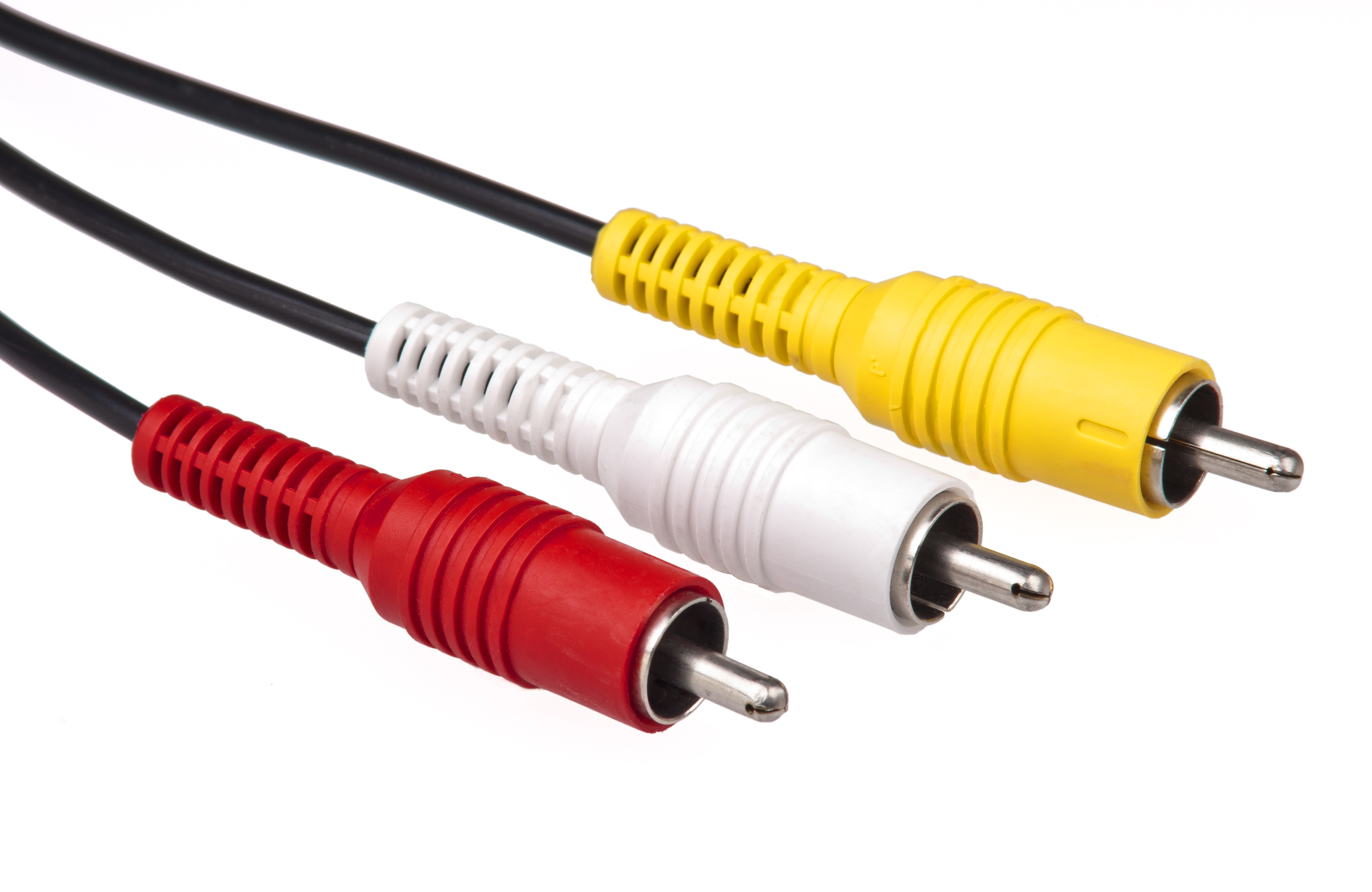
The last audio connector is the RCA phono plug. This quality is an unbalanced connector. It was very commonly used in semi professional equipment. The outer ring of the RCA phono plug and socket are usually used for the screen connections while the central of the pin or socket is usually used for the hot signal connection. The outer of the spring action is all that holds the RCA connector in place. 

Monday, 5 December 2016

Portable Audio Recorders

Portable Audio Recorders

Image result for Portable Recorders

Portable Audio Recorder is a small equipment to record sound of any kind. Some examples are music, interviews, rehearsals and conversations. The quality of Portable Audio Recorder, depends not only on the portable recorder itself but only on the quality of the microphone and more features. 

There are various types of Portable Audio Recorders. Some of them are Sony PCM-M10, Zoom H5 and Roland R-05.

Sony's take on a portable recorder
Sony PCM-M10
If we mention the Sony PCM-M10, this has important features and also it is the most popular. Their microphone is a condenser, omnidirectional. Its batteries has a good life expectancy.


One of our favorite handheld recording devices
Zoom H-5
Zoom H-5 is another example of a portable recorder. This has two XLR cables, for mics. This type of recorder also has approximately fifteen hours for usage. 


Roland's spin on a pocket recorder
Roland R-05

Roland R-05 is another example regarding the Portable Audio Recorders. This type of recorder is usually used for music equipment as this is a solid recorder. This type of recorder is a good quality for one to use. However, this recorder is not ideal to use in a performance. This is because it picks up a lot of background noise.

Sunday, 4 December 2016


Communication Headsets

Headsets come with a microphone and a headphone. Headsets can be either with one ear piece which is called mono or with a double ear piece, this is called stereo. An advantage of a headset is that it is hands-free. Musicians use headsets while recording or singing. Koss CS100 is an example of a headset.


Image result for Examples of Communication headsets
Koss CS100

Communication Headsets or headphones can be wireless. Most of the headphones use Bluetooth. These types of headphones transmit sound, they are wireless and also transmit sound at short distances. Wireless headphones transmit audio from the receiver to the headphones. They could be useful on stage as they are wireless and they transmit sound in an easy way.


Sunday, 27 November 2016

Some Examples of Headphones

In-Ear Headphones

Shure SE 315
In-Ear headphones can be also called earphones. An example of earphones is Shure SE315. This optimizes a full range sound for personal listening and/or professional use.These types of headphones are lightweight. Shure SE315 are found to be cheaper than for example Shure SE846.


Shure SE846
The Shure SE846, is commonly used in professional settings. These types of headphones enable the deep low-end performance. These headphones personalize frequency response, one can also adjust the sound signatures in order to change for example the bright options and the balance. They are made with flexible design. They are also lightweight like the Shure SE315. 

Earphones are widely used as they are practical and the user will find them very comfortable and handy to use. This is because earphones are light in weight. With earphones one can listen to music in tranquility without disturbing others. The majority of people use these types of headphones while driving or travelling. 


On-Ear Headphones

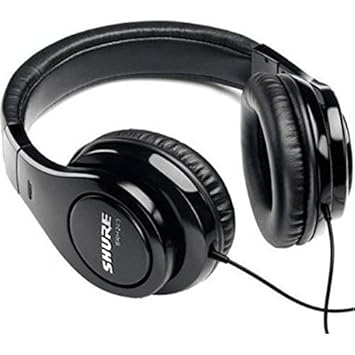
On-Ear Headphones are movable in different directions, this is convenient for the user. These types of headphones gives the user natural 'open' sound. There are some headphones which are closed-back, examples of these are the Shure SRH240A and the Shure SRH440.
Image result for Shure SRH440
Shure SRH440


Image result for Shure SRH240A
Shure SRH240A


Image result for Shure SRH1440
Shure SRH1440
The above headphones are professional. However apart from close-back headphones there are also open-back headphones, example the Shure SRH1440 and the Shure SRH1840.


Image result for Shure SRH1840
Shure SRH1840
The difference between open and closed back headphones are that the closed-back headphones have their speaker found in a solid ear cup. This does not allow sound or air to enter or exit. While on the other hand, open-back headphones, have holes in their ear cup which allows sound to pass through the back of the ear cup. These particular headphones make sound more natural than the closed-back headphones. Open-back headphone are commonly used for audio engineers who mix and edit recordings using headphones. They are also not suitable for monitoring while recording or listening to music in a noisy environment.


A video about open and closed back headphones:

https://www.youtube.com/watch?v=oqsyaHlZ6ro


Musical Headphones

Image result for Shure SE535
Shure SE535
Musicians choose the right headphones to suite their needs for a good performance. If in a performance one would use high quality headphones the user would have a special on-stage control on the headphones. Two examples of earphones that are commonly used are the Shure SE535 and the Shure SE846.
Image result for Shure SE 846
Shure SE846


Gaming Headsets

Razer Kraken Pro V2
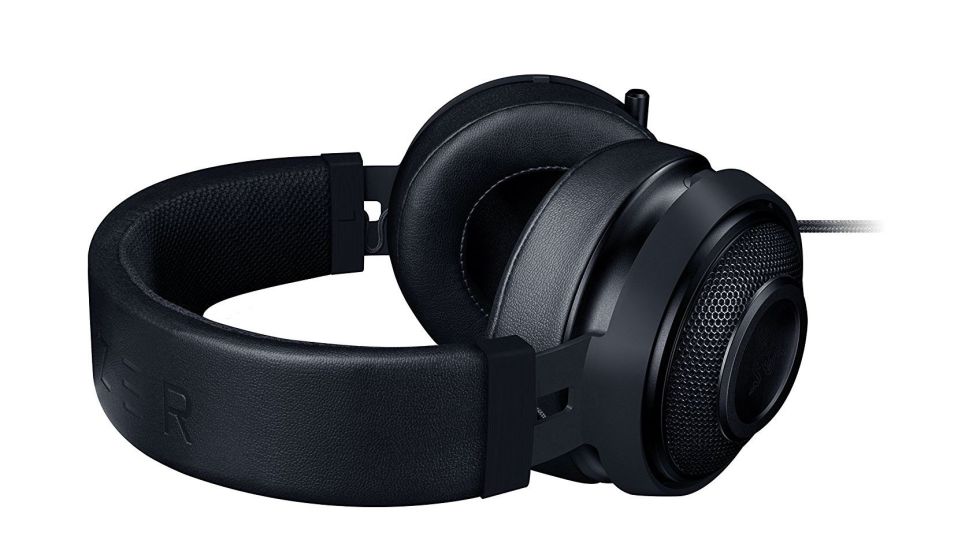
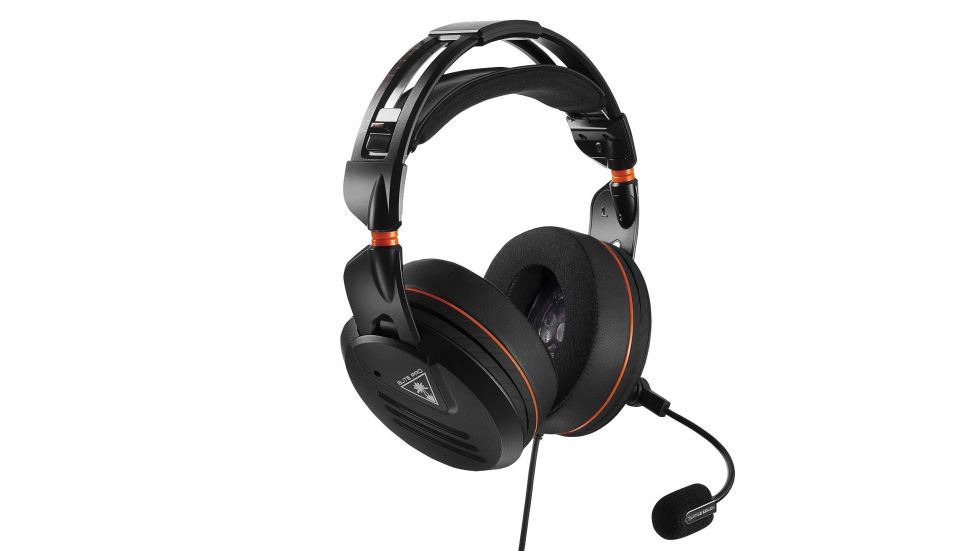
The headsets used for gaming, are designed in an over-ear manner, so that the user will have good accommodation with their massive audio drivers. Headsets with large and soft ear pad gives a person playing a game good communication. Two example of gaming headsets are the Razer Kraken Pro V2 and the Turtle Beach Elite Pro.


Turtle Beach Elite Pro

Low & High Pass Filters


Usually Low and High Pass Filters are used to define the highest and lowest frequencies of interest in the signal.

Low Pass Filter:

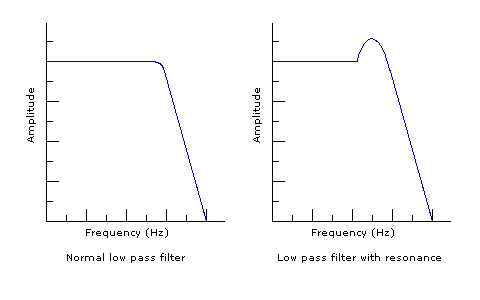
Low Pass Filter can be also called High-cut filter or treble cut filter. This type of filter cuts the high frequencies and lets the lows pass through.


Image result for low pass filter diagram in sound

High Pass Filter:

High Pass Filter can be also called Low-cut filter and also Bass-cut filter. This filter allows higher frequencies to pass through the filter. While recording audio, high pass filter can help us control problems with low frequencies.


Image result for High Pass Filter diagram in sound

High and Low pass Filters are calculated by using frequency and amplitude. Frequency is measured in Hertz (HZ) while amplitude is measured in decibels (dB).


A video clip about the difference between Low and High pass Filters:


https://www.youtube.com/watch?v=JndvN1ngSi4


Pop Filters

Pop filters


An example of Pop Filter is the Shure Ps-6 Popper Stopper. This is usually used for recording and production. The Pop filters can be clamped with the microphone stands. Pop filters are usually used to reduce or take away 'popping' sounds. These filters are normally used for speech and singing.


Monday, 21 November 2016

Monitoring Systems

Wedges & Side Fills

Wedge is a classic monitor use for a stage and one can say that it is positioned, facing upwards and so sound would go from the floor level. It consists of low frequencies and a compression driver with horn. 
Martin Audio LE400C is a classic example. One can place the wedge in different places, this depends on how much distance the performer would be. This example is either left-hand or right-hand models. This means that these come in stereo pairs. 


When using monitors one need to notice that the audience needs to hear the performer and the performer needs to hear him/herself. 
FOH stands for Front Of House Console. Front Of House Console, controls so that the audience could hear the sound. Instead using the traditional monitoring one should use an in-ear monitor. A Disadvantage of In-Ear monitoring is that the performer ends up isolated the performer in his/her performance.


Feedback

What would live sound be without feedback? An undiluted pleasure, many sound engineers would say. But feedback is a fact of life and engineers have to deal with it, monitor engineers included. As is commonly known, feedback is caused by sound from a loudspeaker entering the microphone and being amplified back to the speaker again. If there is any gain in this loop, that familiar howl will be heard by all. The problem for monitoring is that the speakers are very much closer to the microphones than are the FOH speakers. So the FOH engineer doesn't have too hard a time combating feedback, but it is the bane of the monitor engineer's life. And if the monitor engineer allows feedback to occur, the FOH engineer will want to have words, because the audience and the promoter will think he messed up. The keys to avoiding feedback are these:
  • Place the microphone as close to the sound source as possible.
  • If the sound source is loud, that helps.
  • Position the speaker as far from the microphone as possible.
  • Angle the mic away from the speaker, and the speaker away from the mic.
  • Keep the level from the speaker as low as practical in the circumstances.
  • Equalise out the worst-offending frequencies.
David Mellor, 2005. Stage Monitoring & Monitor Mixing. [online] Available at: <http://www.soundonsound.com/techniques/stage-monitoring-monitor-mixing> [Accessed 21st November 2016].

This quote explains how feedback monitoring works. Here also shows the positioning between the mics and the speakers.

Hereunder are some examples regarding monitors:


Image result for Auratone 5C Super Sound Cube monitor
Auratone 5C Super Sound Cube
Auratone 5C Super Sound Cube is a single - driver monitor. This speaker was very popular in the 70's and 80's, used for pictures of classic studio sessions. Some advantages regarding this monitor are single-driver, crystal-clear stereo presentation and excellent depth of overview. A disadvantage for this monitor is, that it is a mid-range balancing tool.


Image result for ESI Unik 05+ monitor
ESI Unik 05+

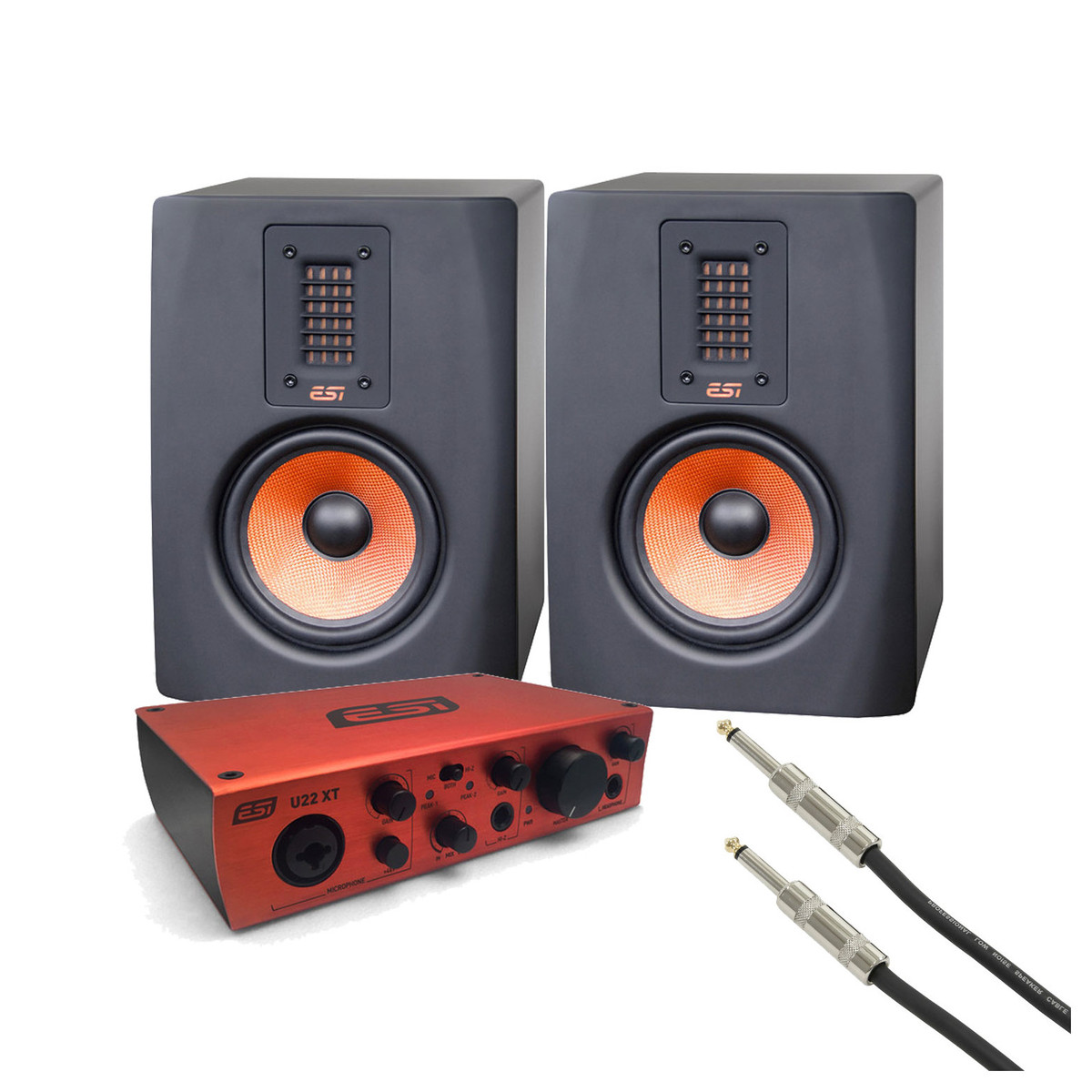
ESI Unik 05+ is a type of an active monitor. This type of monitor is valuable to buy, nowadays. The ESI monitors, are usually used in small studios and something which helps the user to use is that they would let you know if something which is wrong with the user's mixes. Some advantages for this type of monitor are; as I said above, it is valuable to buy, it is useful for a performance using a small monitor and it is detailed, this means that it announces sound. A disadvantage for this type of monitor is that it gets auto-standby and so this means the user must be cautious while using it. 


Image result for Shure P3R monitor
Shure P3R
Shure P3R, wireless body receiver is type of a monitor system. This enables one to adjust either left or right, which are two channels. These are audio or stereo mode. This type of monitor offers approximately six hours of usage. Lastly one can say that this type of monitor is not that expansive.


Positioning Of Monitor Console


Related image
Monitor console
A monitor console can be positioned at any side of a stage. The position of the monitor engineer could be ideal to make it for example closer to a specific musician. It is positioned in a specific place so that the musicians would communicate well.


A video how to ring out stage monitors and control feedback:


https://www.youtube.com/watch?v=v_cWECV8MfU


Saturday, 29 October 2016

Headphones


Headphones
Image result for pictures of different headphones


Headphones is a type of device that is normally worn on the individual's ears. There are a lot of different types of headphones, it depends on what the costumer prefers. This is because there are different headphones that are good for frequency response, the bass, listening and sound. One should check on the usage of these headphones before acquiring them.


Image result for Shure SRH 1540
Shure SRH1540

If we mention for example Shure SRH1540, they are most appropriate for musicians and sound engineers. They are also closed-back headphones. This means that these are closed from the whole cup of the headphone itself and so the sound does not go in.


Image result for Shure SRH144
Shure SRH144

Another example is Shure SRH144,
they have a high frequency response. The cups of these headphones are not all open. Although these types of headphones are cheap, they are commonly used for everyday life.


Image result for shure srh1840
Shure SRH1840
There is another example, this is


Shure SRH1840. This type of headphone has an exact bass for good listening. They are open back headphones. This means that the cup of the headphone itself, is opened at the back.


http://www.shure.com/americas/products/headphones


There are more types of headphones. However, we can discuss not only what products of headphones there are but we can discuss also about the type of headphones available. Some of them are:

  • In-Ear headphones;
  • On-Ear headphones;
  • Musical headphones;
  • Gaming headsets;
  • Communication Headsets;
  • Wireless headphones;
  • Bluetooth headphones.

Tuesday, 25 October 2016

Dynamic & Condenser Mics

Dynamic Microphones:

Image result for shure sm57
Shure SM57
Shure SM 57 and Shure SM58 are two examples of Dynamic Microphones and the ideal use of this type of microphone are on stage. These microphones are commonly used for high musical instruments such as drums, horns, etc. and also for vocals. They can also be used for live performances. Dynamic mics are more stronger than condenser mics, this is due to the Sound Level Pressure (SLP).  However, these types of mics do not pick up every noise from the stage. These also have a limited frequency response compared to Condenser mics. Dynamic Mics, don't have an accurate sound. Last and not least, they don't need a "power supply."


Condenser Microphones:


Image result for condenser mics with names
Different types of Condenser Microphones


Two examples
of condenser mics are:
Nuemann U67 and
AKG 414. They are mostly found in studios. These types of microphones do not pick up loud noises as dynamic mics.
 These are commonly found and used in studios for recording applications, as they are more fragile than dynamic. They also have a high frequency response. 


Image result for large diaphragm condenser
Large Diaphragm Microphone
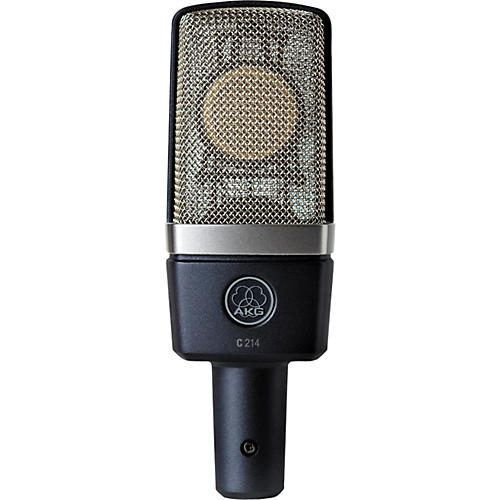
AKG C214


Condenser mics always need a phantom power of 48V and these types of mics need to be connected to a pre-amplifier.


There are two main types of condenser mics. These are called Large Diaphragm Condenser, (LDC) and Small Diaphragm Condenser, (SDC). LDC are more fragile than SDC. 


Large Diaphragm Condenser microphones are more useful for studio vocals and any type of instrument recording. An example is AKG 414. 
Image result for small diaphragm condenser
Small Diaphragm Microphone
Shure SM137 


A Small Diaphragm Condenser (SDC) is generally used for fast sounds. The sound of SDC, is usually trapped from the front. An example of this is Shure SM81. 


https://www.youtube.com/watch?v=nPjUB-KQ3_Q

Polar Patterns

Polar Patterns 

Polar Patterns show how the sound is being picked up by the different types of microphones.
Image result for cardioid polar pattern
Cardioid Polar Pattern


Cardioid Patterns: These show a lot of sensitivity in front of the mic and low sensitivity at the back.


Image result for supercardioid polar pattern
Super cardioid Polar Pattern
Super cardioid Patterns: These depict microphones picking up signals from a single sound. They are mostly used in noisy areas.


Image result for omnidirectional polar patternOmnidirectional: These are the type of microphones in which sounds come equally in all the directions and the sensitivity at all the angles is equal. 


Image result for bidirectional polar pattern
Bidirectional Polar Patterns
Bidiractional: This is a type of microphone in which the figure is likely to be a figure of eight if one can see the pattern which is invisible. This is also likely to be a Large Diaphragm Microphone. The sound of this microphone only obtains sound from in front and also from the back. 

http://www.shure.eu/support_download/educational_content/microphones-basics/microphone_polar_patterns


https://www.youtube.com/watch?v=_MMHi8bQVv0

Microphones

Microphones

As a general rule microphones should be positioned in a proper way so that for example the singer, actor or any person who is on the stage, would be heard well.  There could be also background noise of the preamp itself. Microphones should always be connected with preamp. Clipping is an example in which the sound can be destroyed. If we adjust the gain higher, there could be clipping or distortion in which there will be background noise of the system itself. Therefore the signal has to be higher than the noise.


Every place has its own acoustic as it depends on how many space in that particular room there is. Acoustics is for example audience are clapping and there will be the reflection of sound, this is called reverberation. Acoustics can easily change the quality of the sound. Professional Microphones always need an XLR cable.

There are many types of microphones. Some types of mics are:

  • Lavalier mics;
  • Handheld mics;
  • Shotgun microphones;
  • Boom Mics;
  • Parabolic mics;
  • Earset head worn microphones;
  • Wireless microphones;
  • Ribbon microphones

Lavalier Microphones:
Image result for definition lavalier mics
Lavalier Microphone

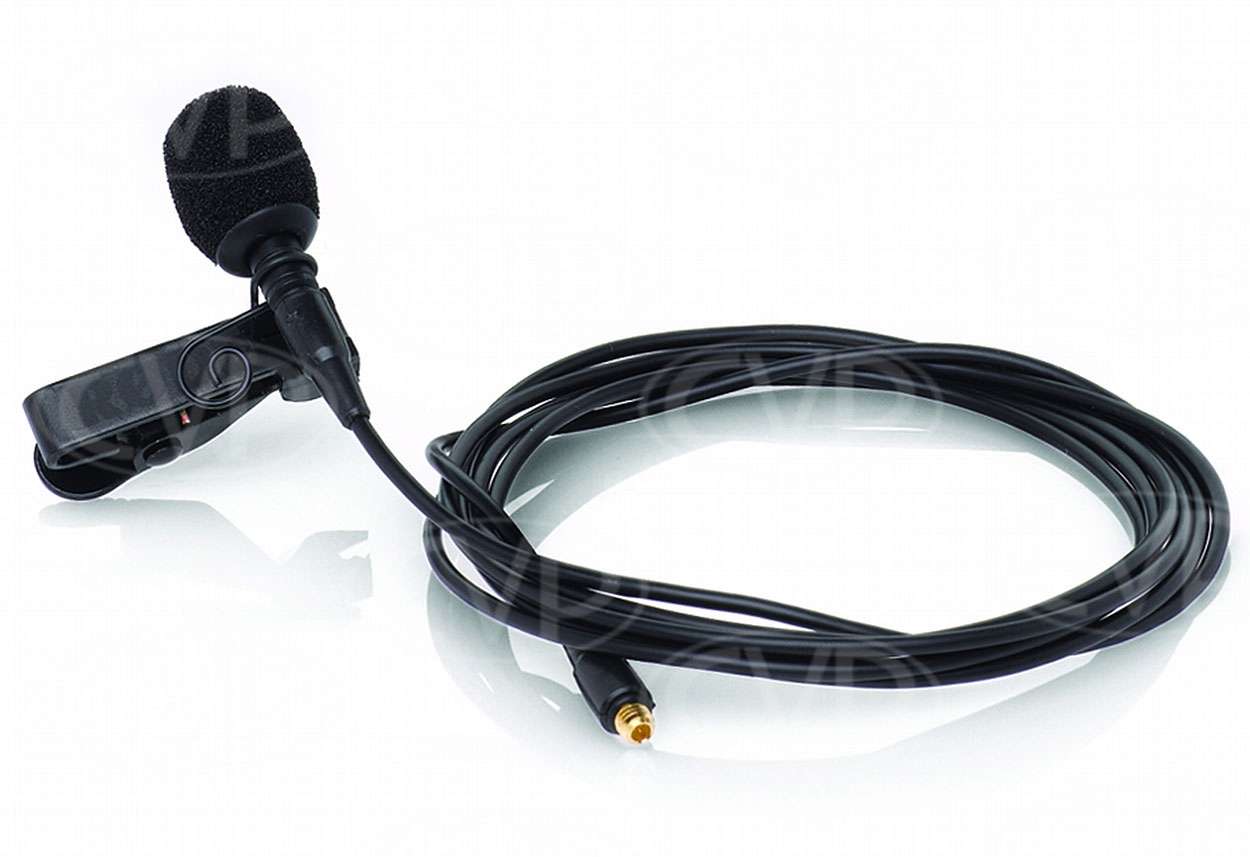
These types of microphones can be attached to a shirt, to a pocket and even to a belt. These mics are mostly used in theatre and television. These mics are not handheld. These mics are easily covered with fabric, hence blending very well with the costumes. 

https://en.wikipedia.org/wiki/Lavalier_microphone7


Image result for definition handheld mics
Handheld Microphone
Handheld Microphones: 

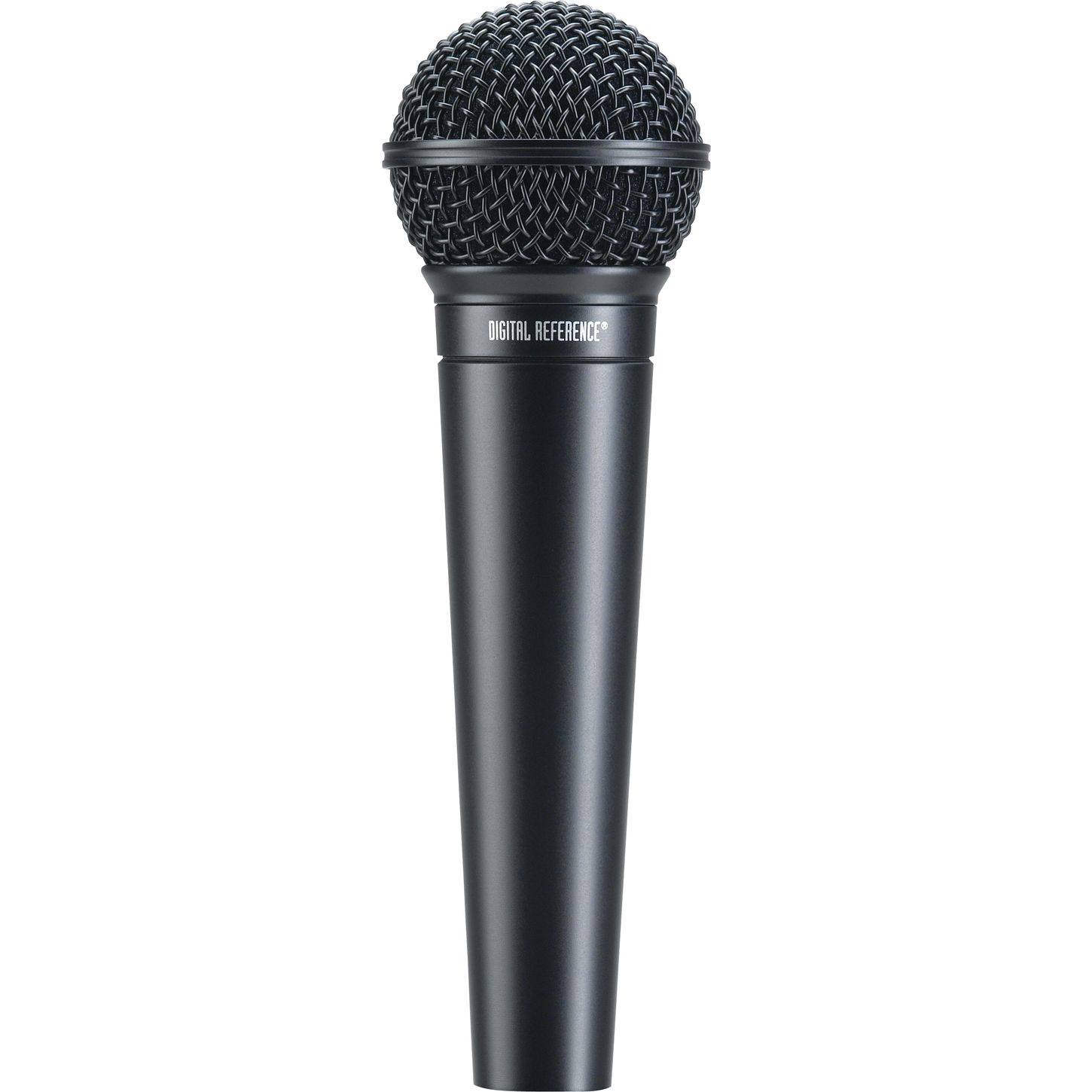
This is a type of microphone in which one would need to hold while talking. This is commonly used in singing or television interviews. However, when one uses this type of mic it is important to monitor the quality of sound that it is projecting. The distance between the mic and the person using it is very important. Also, the mic should be shielded from wind on a windy day.
http://www.mediacollege.com/audio/microphones/hand-held.html

Shotgun Microphones:


Image result for meaning of shotgun mics
Shotgun Microphone
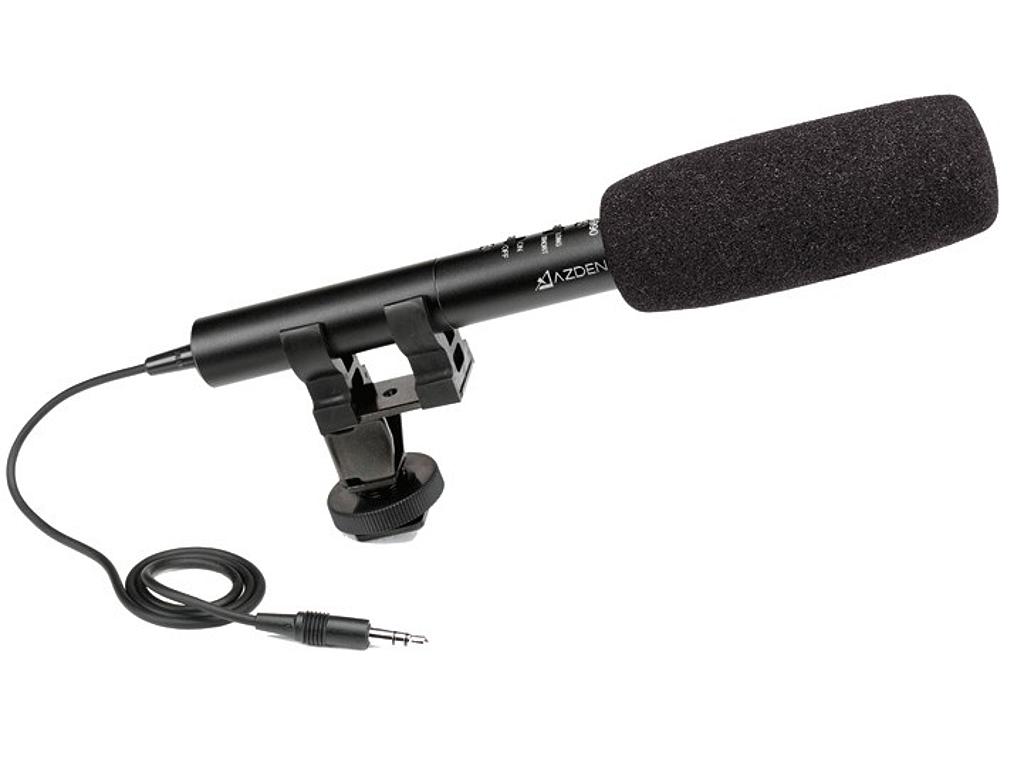
A shotgun microphone is a type of mic in which one has to place it directly in front of the person who is talking so that one could record in a proper way. This type of mic cannot take sound from its sides and its back. It is commonly used in lectures and meetings.

http://www.learningaboutelectronics.com/Articles/What-is-a-shotgun-microphone


Boom Microphones:


Image result for Definition of boom microphone
A Boom microphone can be called a boom pole. This is an overhead mic. It is commonly used for films and TV studios. Boom mics can be moved freely. It is essential to note the distance between the mic and the actor. Boom Mics are made up with sticks and a microphone at the end of it. This microphone picks up sound mostly from the front and so the actors would be hared more if they stay in front
of the mic and so this can be called a directional mic. However, this mic also picks up sound from the back, left and right.


Image result for meaning of Parabolic mics
Parabolic Microphone
Parabolic Microphones:

These are used when sounds are low for recording so one should use this type of microphone. These can be also used for high distances. These are used to record wildlife and outdoor games.

https://en.wikipedia.org/wiki/Parabolic_microphone


Earset Headworn Microphones:
Image result for earset headworn mics showing different colours
Earset Headworn Microphone


An example of Earset Headworn Microphones is Shure MX 153. These types of mics are usually used by actors, singers and musicians. As a mic this is very comfortable for one to use. These mics come in different colours. They have good sound quality.These mics are also adjustable.

http://www.shure.eu/products/microphones/mx153/wireless

Wireless Microphones:
Image result for Wireless mics
Wireless Microphones
Wireless Microphones can also be called Radio Microphones. These types of microphones are very comfortable because they are wireless. This type of microphone has a battery that powers signals to a receiver. It is important to check the batteries that operate these microphones before usage. They are commonly used in television, entertainment or public interviewing. 

https://en.wikipedia.org/wiki/Wireless_microphone

Ribbon Microphones:
Image result for ribbon mics
Ribbon Microphone

These types of microphones were invented early in the 1920's. These mics are used for theatres or loud rock music. They pick up sound from the sides, equally. This is called bidirectional. This type of microphone is a dynamic mic. 

https://en.wikipedia.org/wiki/Ribbon_microphone


All the above microphones are very much used, nowadays. Every mic has its own special use, it depends on what kind of purpose one wants to be used for. 

For example, the Lavalier mic is very effective to use on stage. This is because, one can camouflage the mic in fabric and so the mic will not be seen by the audience. This mic is comfortable when compared with a handheld mic as one would have to hold it, even though it is good to use on stage. 
A Shotgun Microphone, is generally used when addressing an audience and not on stage.
A Parabolic Microphone is not ideal to use on stage as the sound would need to be natural and transmitted from a distance.
Earset Headworn and Wireless microphones are also as good as Lavalier mics to be used on stage.
Ribbon mics are not usually used on stage, except for speeches.


Pop filters


An example of Pop Filter is the Shure Ps-6 Popper Stopper. This is usually used for recording and production. The Pop filters can be clamped with the microphone stands.